
Correction
The 8 July talk mentioned in my last post is for The Wallingford History and Archaeological Society, not the Wallingford u3a.

The 8 July talk mentioned in my last post is for The Wallingford History and Archaeological Society, not the Wallingford u3a.
The spring and summer months are starting to look quite lively. My next (quarterly) u3a national talk by Zoom is booked in for Tuesday 21 April at 2pm on the fascinating Anglo-Saxon period From the Dark Ages to the Viking Age. That will be sandwiched between a couple of trips abroad to new places for
February 2026 – A busy programme ahead! Read More »
After very positive feedback from earlier talks, on 15th January I’ll be giving my next u3a national talk by Zoom. This will follow the Roman ‘colonisation’ of Britain through to the next period, sometimes called ‘the Dark Ages’. I’ll unpick what we know happened, when, how, and possibly why. Whatever else, the immediate post-Roman period
Dark Ages to Magna Carta! Read More »
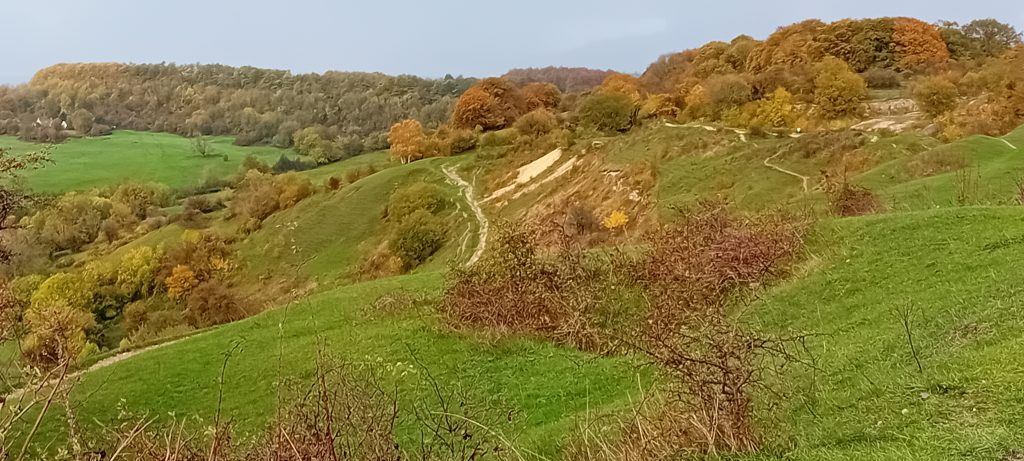
In Ice to Athelstan I mention the ancient hill fort at Crickley Hill in Gloucestershire as the site of an 4th millennium BCE massacre of the local tribe who had settled there. Having now visited the site, perched on the spur of a long ridge on the scarp slope of the Cotswolds near Birdlip, with
Crickley Hill – A view at a price! Read More »
King & Conqueror – a new low? I’ve been working hard on Book 2, which covers the 3+ centuries from the death of Athelstan in 939 to the end of Henry III in 1272. That includes the Danish and Norman Conquests, which I’ve been studying and writing about in detail. So I was interested to
History and drama by Charles Boundy Read More »
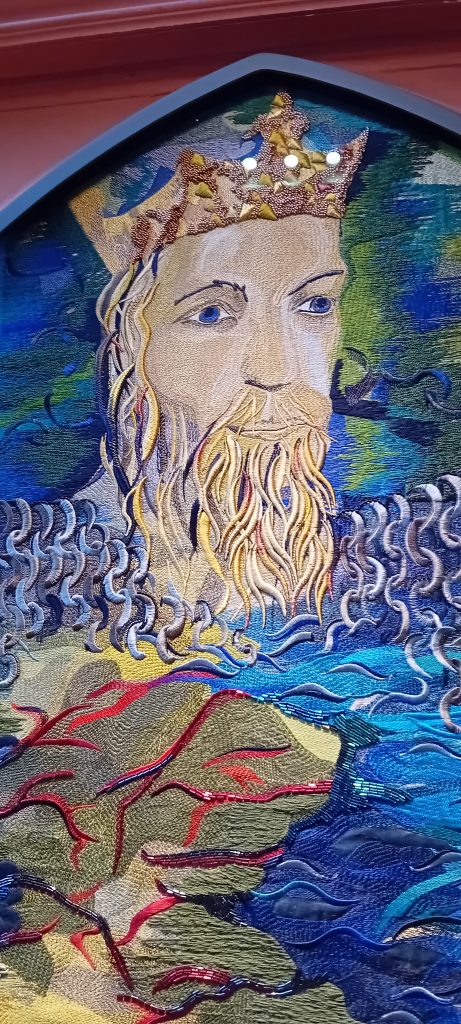
The picture shows a section of a magnificent life-size representation of King Athelstan created by award-winning contemporary embroiderer, Jacky Puzey, for Kingston-upon-Thames. This is part of the ‘Seven Kings’ set of vividly embroidered panels, inspired by this year being the 1100th anniversary of the crowning of King Athelstan there in in 925, with Kingston also
Athelstan’s Big Bash! Read More »

This memorial may not mean much to those from Britain, but is fundamental to Albanians. For them, Skanderbeg, as we know him, is the archetypal national hero. His main claim to fame rests on his success in limiting Ottoman expansion in the Balkans in the 15th century. But with the fame comes the myth, as
Why does nationality matter? Read More »
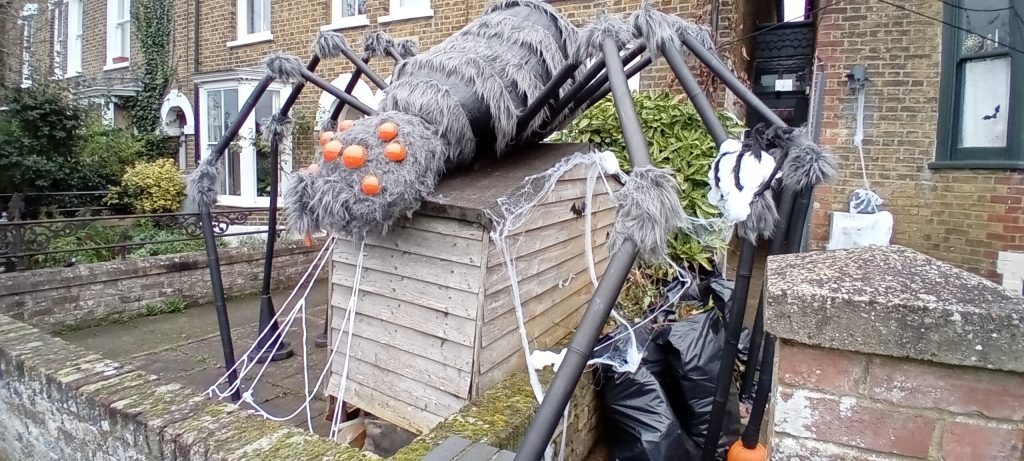
History can help us make sense of traditions that have their roots in the past but have become something rather different over the ages. And this massive spider in a small front garden in Whitstable on the Kent coast got me thinking about why we associate spiders with Halloween. The name itself is a contraction
Halloween and History Read More »